


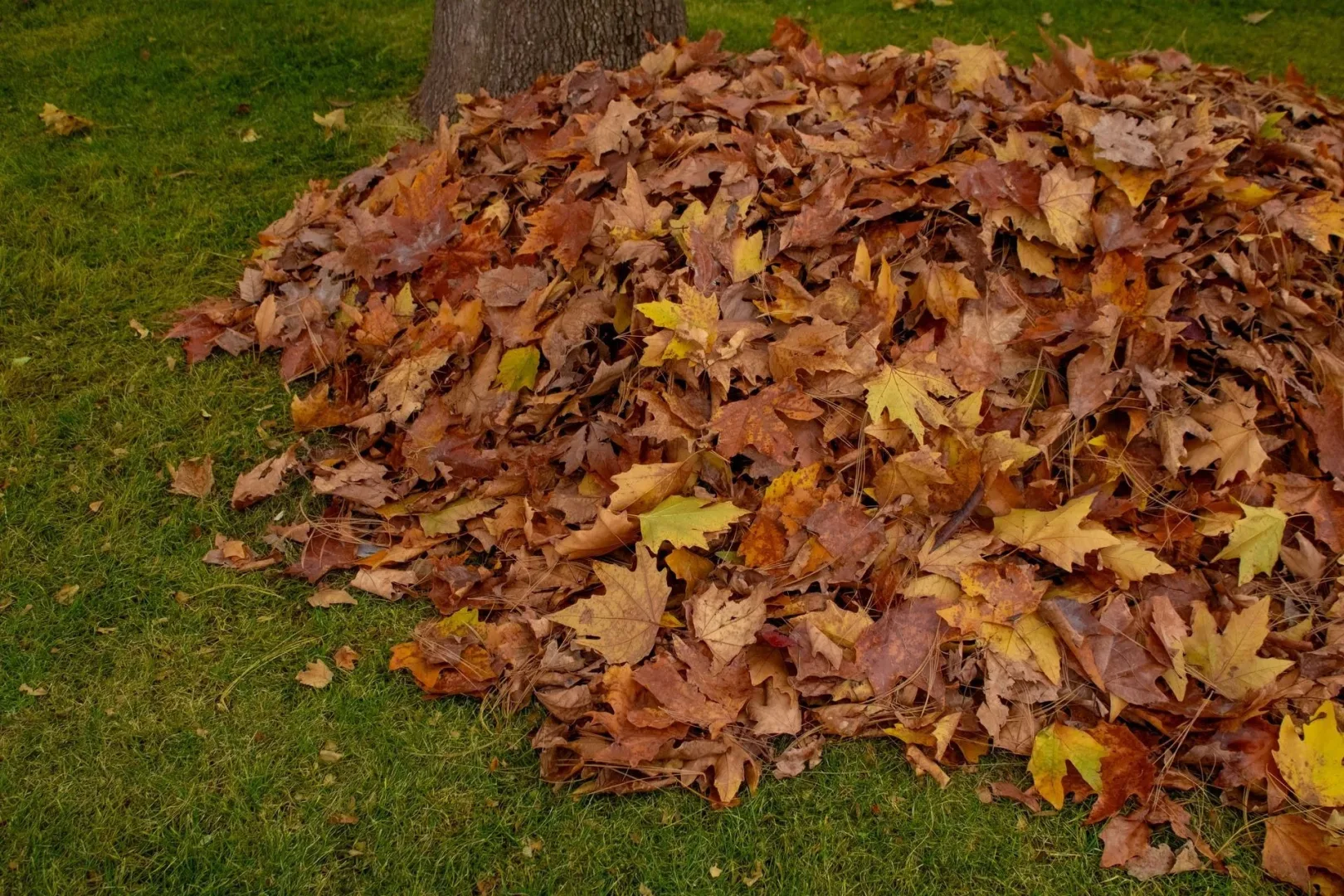
Fall brings plenty of changes to your yard, the most obvious of which is the ample supply of fallen leaves your trees scatter around each year. This is a completely normal part of the season, but these leaves can still take a lot of time and effort to remove, leading many to pile leaves around a tree and leave them there.
Though having a light layer of scattered leaves spread out across your yard is nothing to worry about, dense piles of leaves collecting around your trees can cause problems. So, if you’re getting ready for your annual leaf cleanup and want to make sure you’re doing it in a way that keeps your trees healthy and strong, here is everything you need to know.
Is It OK to Pile Leaves Around a Tree?
When asking about whether it is ok to pile leaves around a tree, it’s important to make the distinction between natural leaf coverage and intentional piles. Trees naturally shed their leaves, so there is no need to keep the ground underneath them completely bare and free of the many nutrients these leaves can provide.
The problems only start when you pile thick layers of leaves around your trees intentionally. Once rain and moisture enter the pile, these piles can become heavy and compacted, creating a dense, damp layer that takes a lot longer to break down.
The goal isn’t to remove every leaf you see, but rather to keep heavy piles away from the trunk to give the tree’s base more exposure to normal airflow.
What Problems Can Excessive Leaf Buildup Cause?
Leaves may look harmless, but a large pile behaves differently from the scattered layer you would typically see beneath a tree. Understanding what happens after leaves sit for several weeks can help you decide when some fall cleanup is worthwhile.
Trapped Moisture Around the Trunk
Freshly fallen leaves are usually light and loose. After several rainy days, however, they can absorb water and settle into a much denser layer.
If wet leaves are packed against a tree, all that moisture can saturate bark and the trunk itself. This oversaturation makes harmful fungus more likely, causing long-term damage that many trees struggle to make a full recovery from.
Less Airflow Near the Soil
A deep layer of leaves can also prevent proper airflow from reaching the soil at a tree’s base. This is detrimental to the soil and the tree roots under it, as air is the key to providing the oxygen that tree roots need to generate energy and absorb water.
Without proper airflow, your tree may begin to slowly suffocate, and in some cases where excess moisture accumulates, it could even cause the roots to rot.
Hiding Places for Pests
Dense leaf piles provide dark, sheltered spaces that may attract insects, rodents, and other small pests looking for cover, which can become a nuisance and cause damage to your tree.
This doesn’t necessarily mean that every small pile of leaves is bound to become infested with insects and rodents. However, large piles that stay undisturbed for weeks or months are likely to be a shelter that local pests will seek out.
How Should You Manage Leaves Around Your Trees?
Managing fall leaves doesn’t need to be a complicated project. All it takes are a few basic cleanup habits to help you maintain a cleaner area around your trees throughout the season.
Keep Heavy Piles Away From the Trunk
When raking or blowing leaves, you should always avoid using the base of a tree as a convenient collection point. Instead, you should be sure to move any large piles elsewhere to keep the base of your tree trunks free from obstructions.
If you aren’t removing your leaf piles right away, it’s useful to keep an eye on the pile to make sure they haven’t shifted towards your trees. Wind can move leaves around after you clean them up, so double-checking these areas throughout the fall season can go a long way to preventing any other large piles of leaves from building up around your trees.
Check Your Trees During Fall Cleanup
Leaf cleanup also gives you a convenient opportunity to look at your trees from the ground up. Once leaves begin dropping from the canopy, branches and the overall tree structure will be much more visible, making it much easier for you to spot any problems or irregularities that you otherwise might have missed.
If you do happen to notice anything that looks uneven or out of place, contact a professional and schedule a routine trimming and any other tree services you may need before these issues get any worse.
Contact AC Tree Experts Today
Our team of certified arborists is always here to answer questions and will happily help you schedule the specific services you need to keep your trees healthy and strong all year round. We can even offer quick-response emergency services so that you always have the resources you need to give your trees the attention they need when they need it most.
Contact AC Tree Experts and get your trees the proper care they deserve today.